Blab Sports
Clemsons Dabo Swinney Faces Sharp Criticism from Paul Finebaum at ACC Media Days
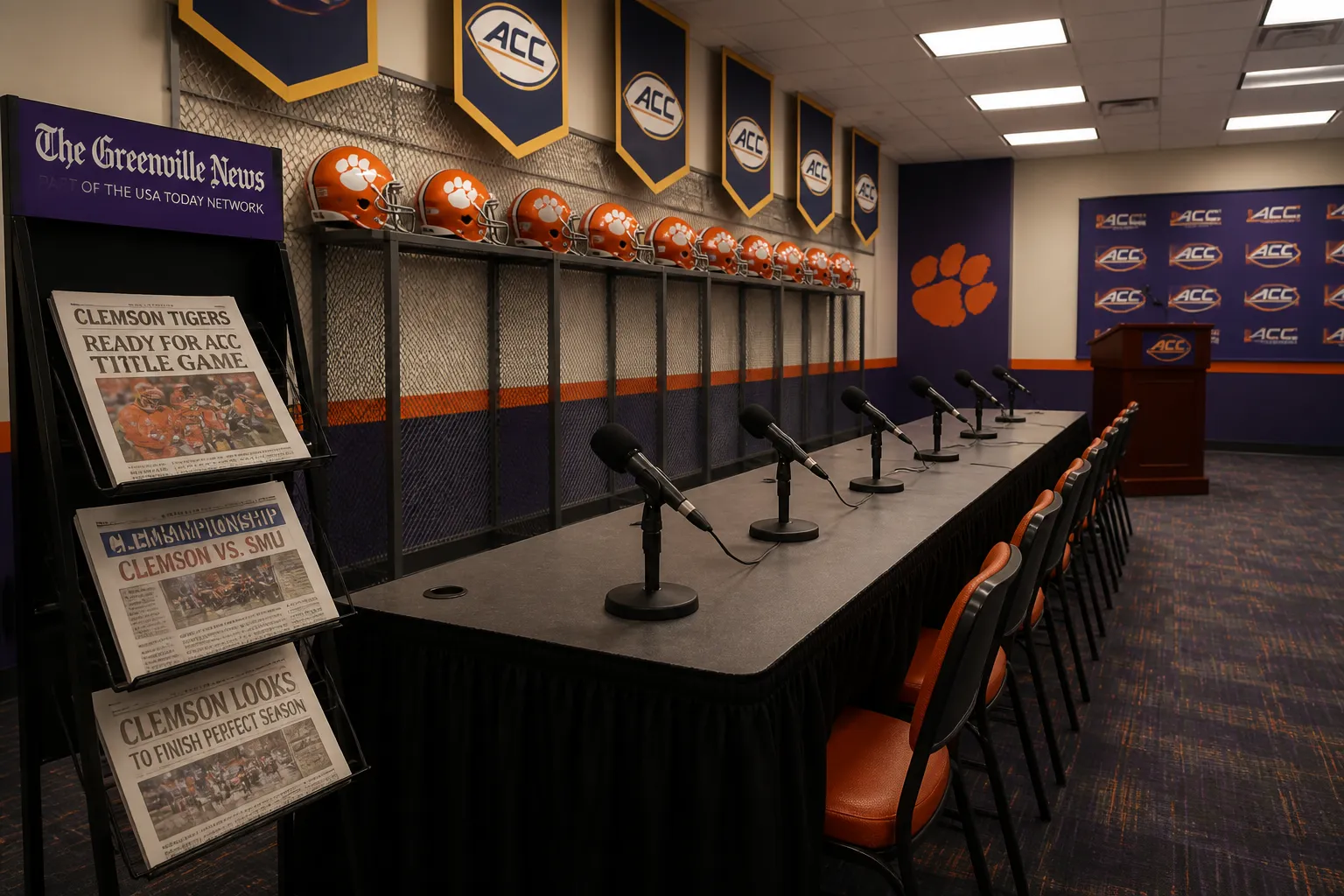
At the 2026 ACC Media Days in Charlotte, Clemson’s head coach Dabo Swinney stood at the podium with the confidence that has defined his tenure, declaring that the program’s legacy had already been proven. He reminded reporters that the Tigers had captured national titles in 2016 and 2018, and that the team had enjoyed a 15‑year stretch of success, including six straight conference championships and a string of 10‑win seasons.
Swinney’s comments drew an immediate and pointed rebuttal from ESPN’s Get Up! host Paul Finebaum, a former columnist and long‑time sports commentator. Speaking on the show, Finebaum said the coach’s focus on past glories was out of touch with the present. He cited Clemson’s 2025 season, which finished 7‑6 and left the team unranked for the first time since 2010, as evidence that the program was slipping.
Finebaum stated, “I am getting so exasperated listening to Dabo tell us how great he used to be. They’re not great anymore.” He added that the loss of six games in 2025, even with a Heisman‑favorite quarterback, was “downright embarrassing.” In a comparison that struck a chord with many viewers, Finebaum likened the situation to how former New England Patriots quarterback Tom Brady does not dwell on past Super Bowl victories.
Swinney took the helm at Clemson in 2008, stepping in mid‑season after Tommy Bowden’s resignation. Since then he has guided the Tigers to two national championships and has been a frequent participant in the College Football Playoff. However, the team has made only one CFP appearance since 2019, and that appearance ended in a first‑round loss. The 2025 record and the absence from the final AP poll marked a clear departure from the program’s recent tradition of competitiveness.
Finebaum’s criticism is not a one‑off incident. He has long questioned whether Swinney has adapted to the evolving landscape of college football, where high‑tempo offenses and sophisticated defensive schemes are becoming the norm. The commentator’s remarks echo concerns that Clemson’s recruiting and game‑planning may lag behind other power‑four programs.
In response to the media‑day exchange, Clemson’s coaching staff and front office issued no formal statement. The athletic department released a brief note acknowledging the remarks and reaffirming confidence in Swinney’s leadership. The note highlighted the program’s record of 27 conference championships and 46 bowl appearances.
The debate underscores a broader conversation about legacy versus present performance in college football. Swinney’s 174 career wins make him Clemson’s winningest coach, and his two national titles remain a benchmark for the program. Yet the struggles of the 2025 season have prompted critics to question whether the Tigers can sustain their status as a national contender.
Clemson will open its 2026 campaign on September 2 against North Carolina, a game that will test whether the program can rebound from the 2025 setbacks. The schedule includes seven home games, with the first matchup at Memorial Stadium a key early test of the team’s competitiveness.
Finebaum’s comments have sparked discussion among analysts and fans about the direction of Clemson football. Whether Swinney will adjust his approach or continue to emphasize the program’s storied past remains to be seen. The upcoming season will be the first real measure of whether Clemson can return to the upper echelons of college football or whether the program’s decline will continue.
In the meantime, the ACC and the NCAA will watch how Clemson’s performance evolves, as the conference’s reputation for competitive football hinges on the success of its flagship programs. The next few weeks will be critical for Clemson, its coaching staff, and the broader college football landscape.
Swinney’s comments drew an immediate and pointed rebuttal from ESPN’s Get Up! host Paul Finebaum, a former columnist and long‑time sports commentator. Speaking on the show, Finebaum said the coach’s focus on past glories was out of touch with the present. He cited Clemson’s 2025 season, which finished 7‑6 and left the team unranked for the first time since 2010, as evidence that the program was slipping.
Finebaum stated, “I am getting so exasperated listening to Dabo tell us how great he used to be. They’re not great anymore.” He added that the loss of six games in 2025, even with a Heisman‑favorite quarterback, was “downright embarrassing.” In a comparison that struck a chord with many viewers, Finebaum likened the situation to how former New England Patriots quarterback Tom Brady does not dwell on past Super Bowl victories.
Swinney took the helm at Clemson in 2008, stepping in mid‑season after Tommy Bowden’s resignation. Since then he has guided the Tigers to two national championships and has been a frequent participant in the College Football Playoff. However, the team has made only one CFP appearance since 2019, and that appearance ended in a first‑round loss. The 2025 record and the absence from the final AP poll marked a clear departure from the program’s recent tradition of competitiveness.
Finebaum’s criticism is not a one‑off incident. He has long questioned whether Swinney has adapted to the evolving landscape of college football, where high‑tempo offenses and sophisticated defensive schemes are becoming the norm. The commentator’s remarks echo concerns that Clemson’s recruiting and game‑planning may lag behind other power‑four programs.
In response to the media‑day exchange, Clemson’s coaching staff and front office issued no formal statement. The athletic department released a brief note acknowledging the remarks and reaffirming confidence in Swinney’s leadership. The note highlighted the program’s record of 27 conference championships and 46 bowl appearances.
The debate underscores a broader conversation about legacy versus present performance in college football. Swinney’s 174 career wins make him Clemson’s winningest coach, and his two national titles remain a benchmark for the program. Yet the struggles of the 2025 season have prompted critics to question whether the Tigers can sustain their status as a national contender.
Clemson will open its 2026 campaign on September 2 against North Carolina, a game that will test whether the program can rebound from the 2025 setbacks. The schedule includes seven home games, with the first matchup at Memorial Stadium a key early test of the team’s competitiveness.
Finebaum’s comments have sparked discussion among analysts and fans about the direction of Clemson football. Whether Swinney will adjust his approach or continue to emphasize the program’s storied past remains to be seen. The upcoming season will be the first real measure of whether Clemson can return to the upper echelons of college football or whether the program’s decline will continue.
In the meantime, the ACC and the NCAA will watch how Clemson’s performance evolves, as the conference’s reputation for competitive football hinges on the success of its flagship programs. The next few weeks will be critical for Clemson, its coaching staff, and the broader college football landscape.