Blab Sports
Irans 2026 World Cup Participation Faces Logistical Hurdles Amid Political Tensions
The Iranian national football team, known as Team Melli, has qualified for the 2026 FIFA World Cup but faces uncertain travel and training arrangements that could affect its preparation for the tournament. Reports from international media and social platforms suggest that Iran may be required to base its training camp in Mexico and only enter the United States for scheduled matches. The issue has sparked debate over competitive fairness and FIFA’s role in ensuring equal conditions for all participating nations.
The 2026 World Cup will be the first edition to feature 48 teams and 104 matches across North America, with the United States, Mexico and Canada jointly hosting the event. The tournament is scheduled to run from 11 June to 19 July 2026. Iran was drawn into Group G, alongside Belgium, Egypt and an additional team that will be determined by the tournament’s group stage draw.
According to reports, the Iranian Football Federation has confirmed that the national team will participate only under strict conditions. The federation has outlined ten conditions that it wants host countries to meet, including assurances that the team can train in a stable base camp and that travel restrictions will not apply to Iranian players beyond those imposed on other teams.
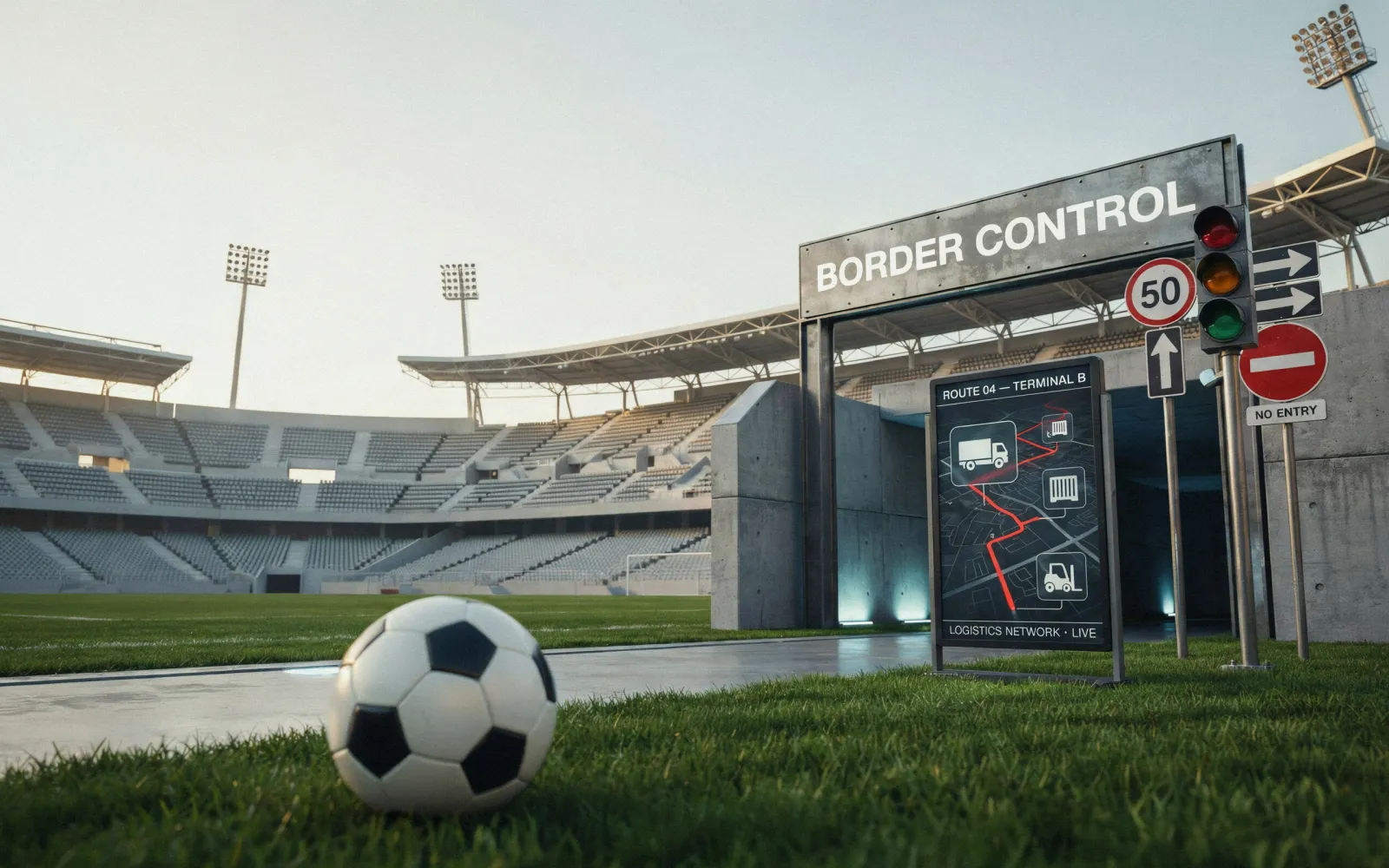
The concern is that if Iran is forced to train in Mexico and travel to the United States only for match days, it would lose the advantage of a consistent training environment. For elite international teams, a stable base camp is considered essential for acclimatization, tactical preparation and player recovery. Any disruption to these routines can directly impact performance on the pitch.
The debate has revived discussions about FIFA’s neutrality. Historically, FIFA has maintained that football should remain separate from political disputes. However, the organization has intervened in politically sensitive situations before, most notably suspending the Russian national team from international competition following the outbreak of the conflict in Ukraine. That decision demonstrated FIFA’s willingness to act when geopolitical events threaten the integrity of international competitions.
Critics argue that FIFA must apply its principles consistently across all member associations if it wishes to preserve its credibility as a neutral administrator of the global game. They point to the potential uneven playing field that could arise if Iran’s logistical arrangements differ from those of other teams.
For Iran, the controversy comes at a time when the national team is preparing for its seventh World Cup appearance. Over the past decade, Team Melli has established itself as one of Asia’s strongest football nations, consistently qualifying for major tournaments and producing players who compete in leading leagues across Europe and the Middle East.
The Iranian federation’s stance is that FIFA has an obligation to guarantee equal sporting conditions for all qualified nations, regardless of political disagreements between governments. The federation has emphasized that players should not be disadvantaged by circumstances beyond their control.
The situation remains unresolved as the tournament approaches. FIFA, host nations and participating federations are under pressure to clarify the conditions under which all teams will compete. The issue extends beyond a single nation or tournament, raising fundamental questions about whether football can truly serve as a universal game when political disputes threaten to shape the conditions under which some teams compete.
As the countdown to kick‑off continues, the focus will be on how FIFA and the host countries address security concerns, diplomatic realities and the principle of sporting equality. The Iranian team’s participation will hinge on whether a clear, fair arrangement can be reached that allows it to train and compete on an equal footing with its opponents.
The next steps will involve formal communications from FIFA and the host associations. Until a definitive decision is announced, Iranian fans and the broader football community will watch closely to see whether the team can secure the conditions it needs to perform at its best in the world’s most prestigious tournament.
The 2026 World Cup will be the first edition to feature 48 teams and 104 matches across North America, with the United States, Mexico and Canada jointly hosting the event. The tournament is scheduled to run from 11 June to 19 July 2026. Iran was drawn into Group G, alongside Belgium, Egypt and an additional team that will be determined by the tournament’s group stage draw.
According to reports, the Iranian Football Federation has confirmed that the national team will participate only under strict conditions. The federation has outlined ten conditions that it wants host countries to meet, including assurances that the team can train in a stable base camp and that travel restrictions will not apply to Iranian players beyond those imposed on other teams.
The concern is that if Iran is forced to train in Mexico and travel to the United States only for match days, it would lose the advantage of a consistent training environment. For elite international teams, a stable base camp is considered essential for acclimatization, tactical preparation and player recovery. Any disruption to these routines can directly impact performance on the pitch.
The debate has revived discussions about FIFA’s neutrality. Historically, FIFA has maintained that football should remain separate from political disputes. However, the organization has intervened in politically sensitive situations before, most notably suspending the Russian national team from international competition following the outbreak of the conflict in Ukraine. That decision demonstrated FIFA’s willingness to act when geopolitical events threaten the integrity of international competitions.
Critics argue that FIFA must apply its principles consistently across all member associations if it wishes to preserve its credibility as a neutral administrator of the global game. They point to the potential uneven playing field that could arise if Iran’s logistical arrangements differ from those of other teams.
For Iran, the controversy comes at a time when the national team is preparing for its seventh World Cup appearance. Over the past decade, Team Melli has established itself as one of Asia’s strongest football nations, consistently qualifying for major tournaments and producing players who compete in leading leagues across Europe and the Middle East.
The Iranian federation’s stance is that FIFA has an obligation to guarantee equal sporting conditions for all qualified nations, regardless of political disagreements between governments. The federation has emphasized that players should not be disadvantaged by circumstances beyond their control.
The situation remains unresolved as the tournament approaches. FIFA, host nations and participating federations are under pressure to clarify the conditions under which all teams will compete. The issue extends beyond a single nation or tournament, raising fundamental questions about whether football can truly serve as a universal game when political disputes threaten to shape the conditions under which some teams compete.
As the countdown to kick‑off continues, the focus will be on how FIFA and the host countries address security concerns, diplomatic realities and the principle of sporting equality. The Iranian team’s participation will hinge on whether a clear, fair arrangement can be reached that allows it to train and compete on an equal footing with its opponents.
The next steps will involve formal communications from FIFA and the host associations. Until a definitive decision is announced, Iranian fans and the broader football community will watch closely to see whether the team can secure the conditions it needs to perform at its best in the world’s most prestigious tournament.