Blab Sports
Irans World Cup squad trains in Tijuana amid visa row and flag controversy
The Iran national football team, known as Team Melli, has shifted its 2026 World Cup training base from Arizona to the Mexican city of Tijuana. The move comes after the United States refused to issue visas for several members of the delegation, sparking a diplomatic dispute that has also drawn attention to a political flag displayed in a local Iranian restaurant.
Tijuana, located 25 miles south of the U.S. border, hosts a very small Iranian community—about 20 people according to local estimates. The community is not large enough to appear in the city’s census data, a stark contrast to the sizeable Iranian enclave in Los Angeles. The team arrived in Tijuana on Sunday, 7 June, and was welcomed by a handful of fans who gathered outside the hotel where the squad is staying.
The restaurant owned by Saied Assadi, the only Iranian‑owned eatery in the city, displays the pre‑1979 Lion and Sun flag. The flag, which featured a green‑white‑red tricolour with a lion and sun emblem, was the national flag of Iran before the 1979 Islamic Revolution and is now banned in the country. Some members of the local Iranian community, such as Dara Makoipour, find the flag off‑putting and prefer to eat in Iranian restaurants in California.
The flag has become a flashpoint ahead of the World Cup. FIFA’s stadium code of conduct prohibits the display of any flag that is “political, offensive and/or discriminatory.” In the 2022 Qatar tournament, security officials denied entry to fans carrying the Lion and Sun flag. A California non‑profit has filed a lawsuit seeking to prevent any restrictions on bringing the flag into stadiums, citing freedom‑of‑expression protections.
The visa dispute began when the U.S. State Department announced it would not allow the Iranian team to “abuse this system to sneak terrorists into the U.S. under false pretenses.” The Iranian ambassador to Mexico, Abolfazl Pasandideh, responded that the Trump administration’s stance was a “terrorist” narrative. Support staff and federation members, including the team supervisor, analysts and press liaison, were denied visas and will remain in Mexico.
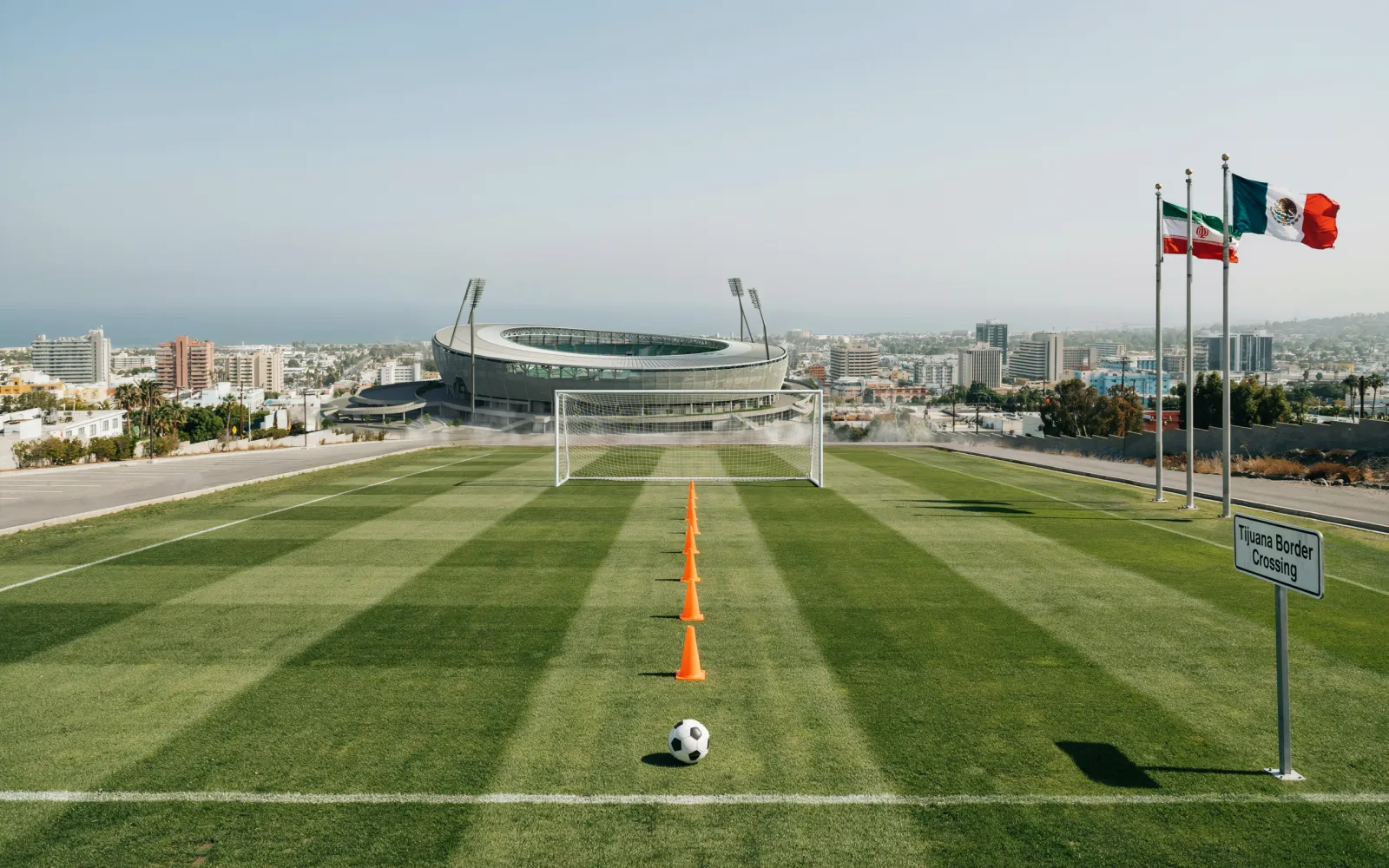
According to reports, the Iranian squad will travel by private plane to Los Angeles one day before their first group‑stage match against New Zealand. The team is traveling with a private chef, and Mexican soldiers guard their hotel. Their only excursions so far have been by chartered bus to a nearby stadium for training.
Team Melli’s arrival in Tijuana has been described by player Saeid Ezzatollahi as a “warm welcome” from the Mexican people. The small Iranian community, while not large, has shown support for the national team. Owner Saied Assadi, who displays the Lion and Sun flag, said he believes the Islamic Republic is “not giving people the freedom” they deserve, but he will cheer the national team regardless of political views.
The situation remains unresolved. FIFA has not yet responded to the lawsuit, and the U.S. State Department has not lifted its visa restrictions. The Iranian team’s training schedule in Tijuana will continue until the start of the tournament, and the team will need to navigate both logistical challenges and the political symbolism of the flag as they prepare for their first match.
In the coming days, the squad will travel to Los Angeles for the opening game against New Zealand. The outcome of the visa dispute and the legal challenge over the flag will likely influence the team’s preparations and the broader diplomatic context of the 2026 World Cup.
The Iranian diaspora in Tijuana remains small but active, and the team’s presence has drawn attention to the intersection of sport, politics, and international relations in a city that sits at the crossroads of two nations.
The team’s next steps will include final training sessions in Los Angeles, a match against New Zealand on 20 June, and a continued focus on team cohesion amid external pressures. The resolution of the visa and flag controversies will be closely watched by both the Iranian federation and the international football community.
The situation underscores the complex environment in which the 2026 World Cup is unfolding, where sporting events intersect with geopolitical tensions and cultural symbolism.
Tijuana, located 25 miles south of the U.S. border, hosts a very small Iranian community—about 20 people according to local estimates. The community is not large enough to appear in the city’s census data, a stark contrast to the sizeable Iranian enclave in Los Angeles. The team arrived in Tijuana on Sunday, 7 June, and was welcomed by a handful of fans who gathered outside the hotel where the squad is staying.
The restaurant owned by Saied Assadi, the only Iranian‑owned eatery in the city, displays the pre‑1979 Lion and Sun flag. The flag, which featured a green‑white‑red tricolour with a lion and sun emblem, was the national flag of Iran before the 1979 Islamic Revolution and is now banned in the country. Some members of the local Iranian community, such as Dara Makoipour, find the flag off‑putting and prefer to eat in Iranian restaurants in California.
The flag has become a flashpoint ahead of the World Cup. FIFA’s stadium code of conduct prohibits the display of any flag that is “political, offensive and/or discriminatory.” In the 2022 Qatar tournament, security officials denied entry to fans carrying the Lion and Sun flag. A California non‑profit has filed a lawsuit seeking to prevent any restrictions on bringing the flag into stadiums, citing freedom‑of‑expression protections.
The visa dispute began when the U.S. State Department announced it would not allow the Iranian team to “abuse this system to sneak terrorists into the U.S. under false pretenses.” The Iranian ambassador to Mexico, Abolfazl Pasandideh, responded that the Trump administration’s stance was a “terrorist” narrative. Support staff and federation members, including the team supervisor, analysts and press liaison, were denied visas and will remain in Mexico.
According to reports, the Iranian squad will travel by private plane to Los Angeles one day before their first group‑stage match against New Zealand. The team is traveling with a private chef, and Mexican soldiers guard their hotel. Their only excursions so far have been by chartered bus to a nearby stadium for training.
Team Melli’s arrival in Tijuana has been described by player Saeid Ezzatollahi as a “warm welcome” from the Mexican people. The small Iranian community, while not large, has shown support for the national team. Owner Saied Assadi, who displays the Lion and Sun flag, said he believes the Islamic Republic is “not giving people the freedom” they deserve, but he will cheer the national team regardless of political views.
The situation remains unresolved. FIFA has not yet responded to the lawsuit, and the U.S. State Department has not lifted its visa restrictions. The Iranian team’s training schedule in Tijuana will continue until the start of the tournament, and the team will need to navigate both logistical challenges and the political symbolism of the flag as they prepare for their first match.
In the coming days, the squad will travel to Los Angeles for the opening game against New Zealand. The outcome of the visa dispute and the legal challenge over the flag will likely influence the team’s preparations and the broader diplomatic context of the 2026 World Cup.
The Iranian diaspora in Tijuana remains small but active, and the team’s presence has drawn attention to the intersection of sport, politics, and international relations in a city that sits at the crossroads of two nations.
The team’s next steps will include final training sessions in Los Angeles, a match against New Zealand on 20 June, and a continued focus on team cohesion amid external pressures. The resolution of the visa and flag controversies will be closely watched by both the Iranian federation and the international football community.
The situation underscores the complex environment in which the 2026 World Cup is unfolding, where sporting events intersect with geopolitical tensions and cultural symbolism.