Blab Sports
Keralas World Cup Fever: Community Screens, New Grounds, and Time-Zone Challenges
The 2026 FIFA World Cup, slated for June 11 to July 19, has sparked a fever across Kerala. In towns and villages alike, fan clubs have transformed streets into football arenas, erecting towering cutouts of Lionel Messi, Neymar, and Cristiano Ronaldo while installing LED screens that broadcast live matches to neighbourhoods.
A spark of local pride flares with the selection of 19‑year‑old winger Tahsin Mohammed Jamshid. Born in Doha to Kannur parents, Jamshid is the first player of Indian origin to earn a spot on a FIFA World Cup roster. Should he take the field for Qatar, he would become the first Indian‑origin athlete to compete in the tournament.
Community viewing has diversified beyond commercial fan parks and cinema‑hall screenings. Traditional open‑air watch parties now sprout in towns and villages, and football‑themed mundus and lungis emblazoned with star players and team colours have become fashion staples.
A standout local initiative comes from Sarilaya Club in Kurikkathoor, Kunnamangalam, Kozhikode. The club purchased one acre of land for ₹20 lakh, financed by ₹2,000 contributions from 1,700 members. While the land will eventually host a new football ground to address the shortage of playing fields for children, Sarilaya has already announced a football carnival during the World Cup season. The event will feature a giant screen and seating for more than 500 spectators.
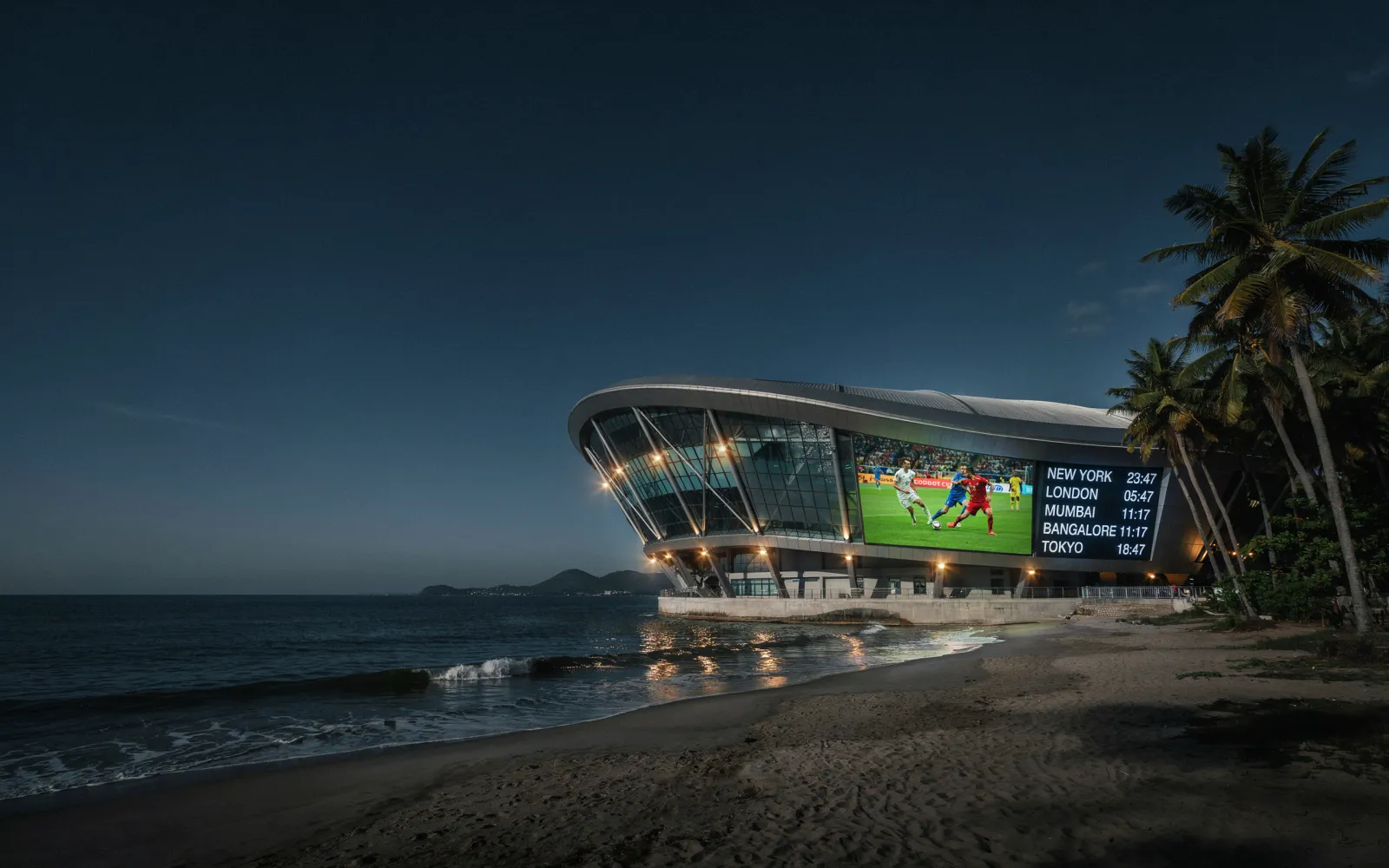
The tournament’s schedule presents a unique challenge for India. Most matches are slated for post‑midnight and early‑morning hours in the United States, Mexico, and Canada—times that fall outside the prime viewing window for Indian audiences. According to Dominic Savio, founder of Buzzstop Integrated Communications, this timing has dampened advertiser interest in live broadcasts because reach and commercial viability are lower.
Savio also warned that the time‑zone disadvantage could affect digital monetisation. While over‑the‑top services can still profit from highlights and catch‑up viewing, premium advertising rates are closely tied to live audience numbers. He suggested that brands shift a portion of their football marketing budgets toward experiential initiatives such as public screenings, fan engagement programmes, prediction contests, and community‑based activations rather than conventional television advertising.
The timing issue is especially significant in Kerala, where football traditionally commands strong engagement. In 2022, the state saw substantial participation from brands and marketers, including sponsorship from the Kerala‑based edtech company Byju’s. The 2026 tournament could serve as a case study for broadcasters, advertisers, and streaming platforms on how global sporting events perform in a market where audience attention is fragmented and commercial success depends on viewing convenience.
The 2026 edition is the first World Cup to be hosted by three nations—United States, Mexico, and Canada—and the first to feature 48 teams, an expansion from the previous 32‑team format. The tournament will conclude on July 19, 2026, after matches in 16 host cities.
As Kerala’s football community prepares for the World Cup, fan clubs continue to organise screenings and community events, while local clubs like Sarilaya work to convert land into playing fields. The state’s enthusiasm is already evident in the streets, screens, and sporting culture that will carry the World Cup’s spirit through the summer.
In the coming weeks, Kerala fans will be watching the tournament’s opening matches, which begin on June 11, and will continue to follow the progress of Qatar’s squad, which includes Jamshid. The state’s community initiatives and the broader commercial response to the timing of the matches will shape how the World Cup is experienced across India.
The World Cup will conclude on July 19, 2026, and Kerala’s ongoing community screenings, new ground developments, and marketing strategies will remain in focus as the tournament unfolds.
A spark of local pride flares with the selection of 19‑year‑old winger Tahsin Mohammed Jamshid. Born in Doha to Kannur parents, Jamshid is the first player of Indian origin to earn a spot on a FIFA World Cup roster. Should he take the field for Qatar, he would become the first Indian‑origin athlete to compete in the tournament.
Community viewing has diversified beyond commercial fan parks and cinema‑hall screenings. Traditional open‑air watch parties now sprout in towns and villages, and football‑themed mundus and lungis emblazoned with star players and team colours have become fashion staples.
A standout local initiative comes from Sarilaya Club in Kurikkathoor, Kunnamangalam, Kozhikode. The club purchased one acre of land for ₹20 lakh, financed by ₹2,000 contributions from 1,700 members. While the land will eventually host a new football ground to address the shortage of playing fields for children, Sarilaya has already announced a football carnival during the World Cup season. The event will feature a giant screen and seating for more than 500 spectators.
The tournament’s schedule presents a unique challenge for India. Most matches are slated for post‑midnight and early‑morning hours in the United States, Mexico, and Canada—times that fall outside the prime viewing window for Indian audiences. According to Dominic Savio, founder of Buzzstop Integrated Communications, this timing has dampened advertiser interest in live broadcasts because reach and commercial viability are lower.
Savio also warned that the time‑zone disadvantage could affect digital monetisation. While over‑the‑top services can still profit from highlights and catch‑up viewing, premium advertising rates are closely tied to live audience numbers. He suggested that brands shift a portion of their football marketing budgets toward experiential initiatives such as public screenings, fan engagement programmes, prediction contests, and community‑based activations rather than conventional television advertising.
The timing issue is especially significant in Kerala, where football traditionally commands strong engagement. In 2022, the state saw substantial participation from brands and marketers, including sponsorship from the Kerala‑based edtech company Byju’s. The 2026 tournament could serve as a case study for broadcasters, advertisers, and streaming platforms on how global sporting events perform in a market where audience attention is fragmented and commercial success depends on viewing convenience.
The 2026 edition is the first World Cup to be hosted by three nations—United States, Mexico, and Canada—and the first to feature 48 teams, an expansion from the previous 32‑team format. The tournament will conclude on July 19, 2026, after matches in 16 host cities.
As Kerala’s football community prepares for the World Cup, fan clubs continue to organise screenings and community events, while local clubs like Sarilaya work to convert land into playing fields. The state’s enthusiasm is already evident in the streets, screens, and sporting culture that will carry the World Cup’s spirit through the summer.
In the coming weeks, Kerala fans will be watching the tournament’s opening matches, which begin on June 11, and will continue to follow the progress of Qatar’s squad, which includes Jamshid. The state’s community initiatives and the broader commercial response to the timing of the matches will shape how the World Cup is experienced across India.
The World Cup will conclude on July 19, 2026, and Kerala’s ongoing community screenings, new ground developments, and marketing strategies will remain in focus as the tournament unfolds.