Blab Sports
Argentina Fans Turn to Superstition Ahead of World Cup Final vs Spain
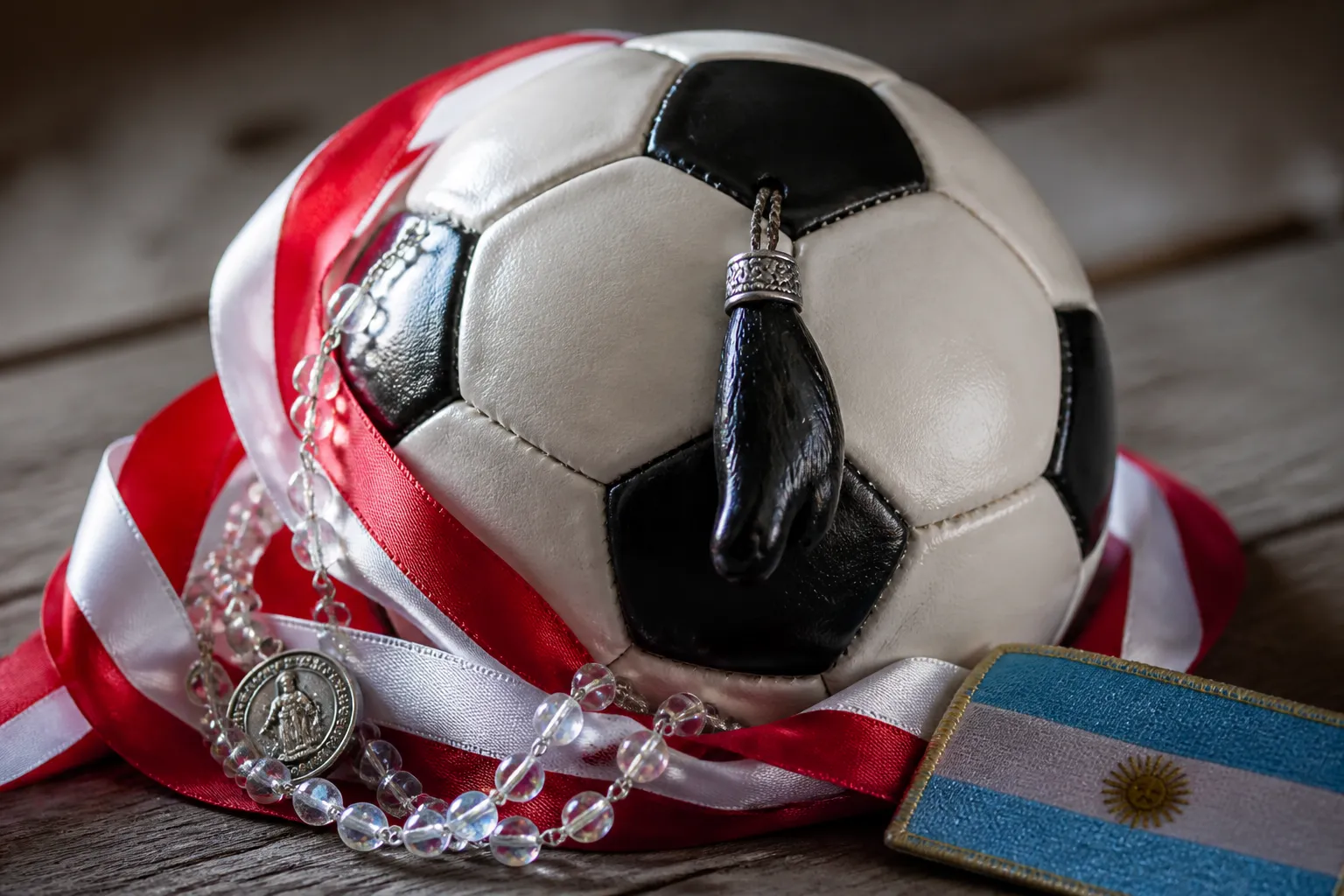
When the world’s focus shifts to MetLife Stadium on July 19, the buzz in Argentina is less about tactics and more about tradition. A country that has lived through three World Cup finals now turns to rituals that promise to keep the luck alive.
In the working‑class barrio of Liniers, 48‑year‑old accountant Andrés González sits on a worn sofa, the same one he used for the 2022 victory. He told AFP that the key to a win lies in a "cabala"—a set of good‑luck practices that mirror the conditions of the last triumph. "No one moves from the spot they occupied the last time," he explained. "If you went to the bathroom and there’s a goal, we lock you in. You stay there until the match is over." The idea is simple: recreate the exact environment of the previous success and hope the same magic follows.
President Javier Milei, who has long been a silent observer of football, confirmed he will not attend the final in person. "Under no circumstances would Milei break his custom of watching World Cup matches from the presidential residence," he said, a statement that underscores how deeply superstition has woven itself into Argentine football culture.
Rituals are a nationwide affair. Saleswoman Estela Vargas keeps the same clothes on for the match and insists the family dog stay outside. In her home, the dog wears an Argentina jersey when the opponent is England but is kept outside for Spain. Graciela Campos says her mother‑in‑law must leave the room and knit a blue‑and‑white scarf before the game. Retired Boca Juniors supporter Lidia Otero swears that "all my rituals work every time." She described turning her dog to face the TV in the first half of the England match, then turning it back in the second half—a move she believes coincided with the change in score.
Sociologist Diego Murzi told AFP that Argentine fans feel more like participants than spectators. "In football, Argentines don’t feel like spectators but like protagonists," he said. "Rituals are part of that – feeling involved by bringing good luck and warding off bad luck." Murzi also noted that the practice is widespread in Argentine football, citing former coach Carlos Bilardo as an example. He recalled Bilardo’s habit of having a phone ring in the locker room and ensuring the same player answered but no one responded—a ritual Bilardo repeated after Argentina’s 1986 World Cup win.
The superstition trail continues into the next generation. 11‑year‑old Messi fan Rodrigo Serna keeps a sticker of an opponent’s name in the freezer, a tradition taught by his grandfather. The practice is part of a broader cultural pattern that dates back to the 1986 tournament, when superstitions were a visible part of the team’s preparation.
The stakes are high: Argentina will face Spain in the 2026 FIFA World Cup final on Sunday, July 19, at MetLife Stadium in East Rutherford, New Jersey. The match follows a 2‑1 semi‑final victory over England in Atlanta, putting the Albiceleste one game away from a second consecutive title. Spain reached the final after defeating France in the semi‑final. Kickoff is scheduled for 3 p.m. Eastern Time, and the game will be broadcast worldwide.
If Argentina can defend its 2022 title, it will become the first South American team to win three consecutive World Cups—a historic achievement that would etch the country’s name even deeper into football lore.
As fans gather in stadiums and at home, rituals continue to play a role in the national mood. Whether or not the superstitions influence the outcome, they underscore the emotional intensity that surrounds the world’s biggest football event.
In the working‑class barrio of Liniers, 48‑year‑old accountant Andrés González sits on a worn sofa, the same one he used for the 2022 victory. He told AFP that the key to a win lies in a "cabala"—a set of good‑luck practices that mirror the conditions of the last triumph. "No one moves from the spot they occupied the last time," he explained. "If you went to the bathroom and there’s a goal, we lock you in. You stay there until the match is over." The idea is simple: recreate the exact environment of the previous success and hope the same magic follows.
President Javier Milei, who has long been a silent observer of football, confirmed he will not attend the final in person. "Under no circumstances would Milei break his custom of watching World Cup matches from the presidential residence," he said, a statement that underscores how deeply superstition has woven itself into Argentine football culture.
Rituals are a nationwide affair. Saleswoman Estela Vargas keeps the same clothes on for the match and insists the family dog stay outside. In her home, the dog wears an Argentina jersey when the opponent is England but is kept outside for Spain. Graciela Campos says her mother‑in‑law must leave the room and knit a blue‑and‑white scarf before the game. Retired Boca Juniors supporter Lidia Otero swears that "all my rituals work every time." She described turning her dog to face the TV in the first half of the England match, then turning it back in the second half—a move she believes coincided with the change in score.
Sociologist Diego Murzi told AFP that Argentine fans feel more like participants than spectators. "In football, Argentines don’t feel like spectators but like protagonists," he said. "Rituals are part of that – feeling involved by bringing good luck and warding off bad luck." Murzi also noted that the practice is widespread in Argentine football, citing former coach Carlos Bilardo as an example. He recalled Bilardo’s habit of having a phone ring in the locker room and ensuring the same player answered but no one responded—a ritual Bilardo repeated after Argentina’s 1986 World Cup win.
The superstition trail continues into the next generation. 11‑year‑old Messi fan Rodrigo Serna keeps a sticker of an opponent’s name in the freezer, a tradition taught by his grandfather. The practice is part of a broader cultural pattern that dates back to the 1986 tournament, when superstitions were a visible part of the team’s preparation.
The stakes are high: Argentina will face Spain in the 2026 FIFA World Cup final on Sunday, July 19, at MetLife Stadium in East Rutherford, New Jersey. The match follows a 2‑1 semi‑final victory over England in Atlanta, putting the Albiceleste one game away from a second consecutive title. Spain reached the final after defeating France in the semi‑final. Kickoff is scheduled for 3 p.m. Eastern Time, and the game will be broadcast worldwide.
If Argentina can defend its 2022 title, it will become the first South American team to win three consecutive World Cups—a historic achievement that would etch the country’s name even deeper into football lore.
As fans gather in stadiums and at home, rituals continue to play a role in the national mood. Whether or not the superstitions influence the outcome, they underscore the emotional intensity that surrounds the world’s biggest football event.