Blab Sports
Spain Clinches 2026 World Cup Title with Extra-Time Goal Over Argentina
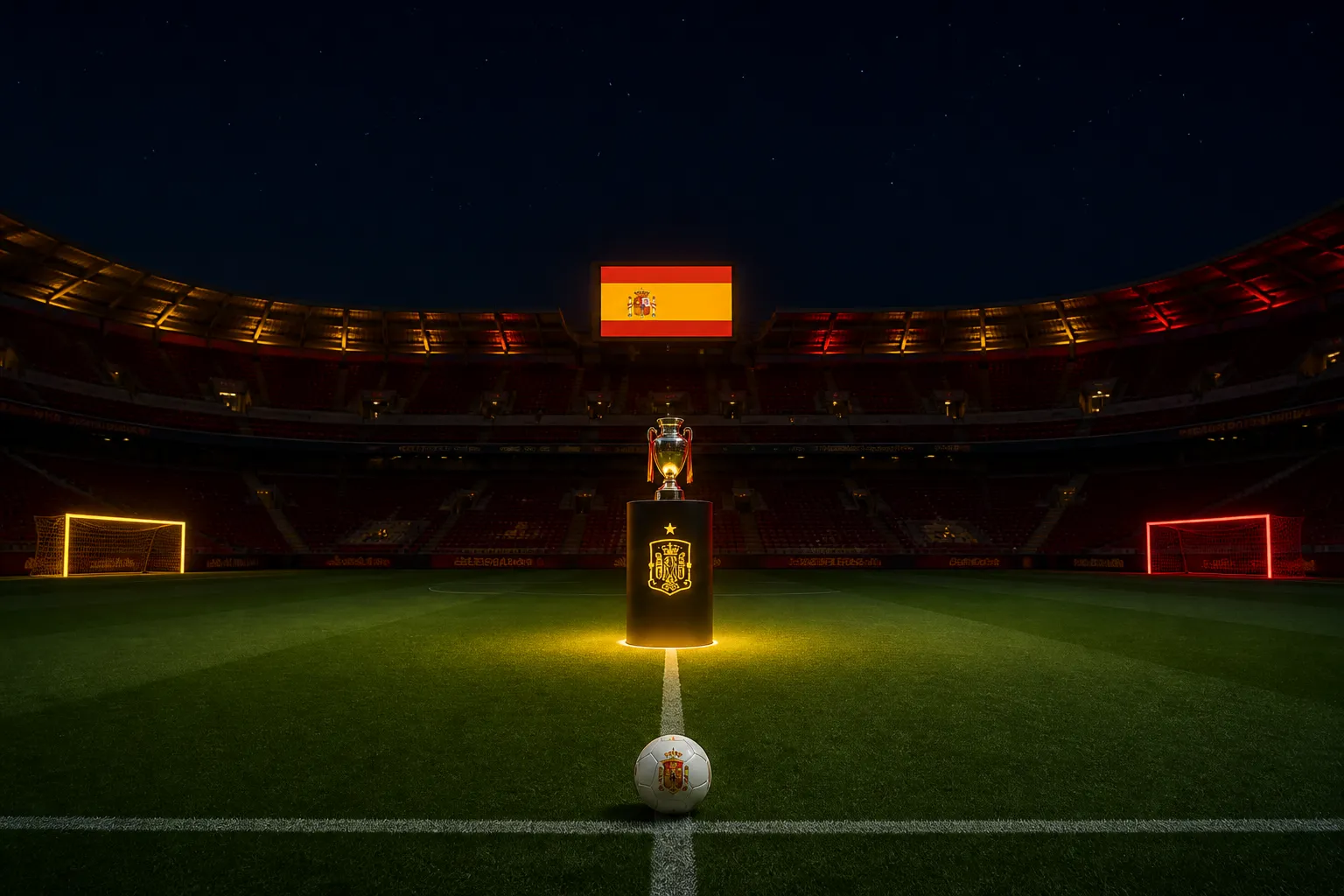
On Sunday, July 19, 2026, the world’s attention converged on New York New Jersey Stadium in East Rutherford, New Jersey, where Spain edged Argentina 1‑0 after extra time to claim the FIFA World Cup. The lone goal, a 106th‑minute strike by substitute Ferran Torres, secured Spain’s second title and marked the first time a nation held both the men’s and women’s World Cup crowns simultaneously.
The final was a study in patience and discipline. Argentina entered the match with a red card for Enzo Fernández, who was sent off in the first half, leaving the hosts to rely on sheer resilience. During the 90 minutes of regulation, the Argentine side failed to register a single shot on goal and recorded an expected‑goals (xG) figure of just 0.09 compared with Spain’s 1.72. Goalkeeper Emiliano Martínez made an unprecedented 11 saves, the highest total ever recorded in a World Cup final.
A 26‑minute halftime break, the longest in the competition’s history, interrupted the flow of the game. The extended pause exceeded the 15‑minute standard set by the International Football Association Board, a rare procedural anomaly that added a layer of intrigue to an already tense encounter.
Spain’s road to the championship was built on consistency. After topping Group H with two wins and a draw, the team dispatched Austria in the round of 32, Portugal in the round of 16, Belgium in the quarter‑final, and France in the semi‑final. Argentina mirrored this path, finishing first in Group J, then defeating Cape Verde, Egypt, Switzerland, and England to reach the final.
The 2026 tournament itself was historic: it was the first World Cup to feature 48 teams and the first to be hosted jointly by the United States, Mexico, and Canada. Sixteen cities accommodated matches—eleven in the United States, three in Mexico, and two in Canada—over a 39‑day period from June 11 to July 19. Attendance across the event reached nearly seven million, eclipsing the 1994 edition held in the United States.
Individual accolades highlighted the tournament’s competitive breadth. Captain Rodri earned the Golden Ball, while goalkeepers Unai Simón and Pau Cubarsí shared the Golden Glove. Kylian Mbappé captured the Golden Boot with ten goals, and Cubarsí was named Young Player of the Tournament.
Spain’s triumph carries implications beyond the trophy. As the first nation to hold both the men’s and women’s World Cup titles, the country’s footballing infrastructure will be examined in the context of future host bids. Argentina, meanwhile, will review its performance as it prepares for the next cycle, while FIFA and the host nations will analyze the logistical execution—ticket pricing, stadium operations, and the extended halftime—to inform future tournaments.
In the end, the 2026 World Cup proved to be a landmark event, demonstrating football’s global reach and the enduring allure of the World Cup format. Spain’s extra‑time victory over Argentina will be remembered as a testament to strategic patience, individual brilliance, and the relentless pursuit of excellence that defines the sport.
The final was a study in patience and discipline. Argentina entered the match with a red card for Enzo Fernández, who was sent off in the first half, leaving the hosts to rely on sheer resilience. During the 90 minutes of regulation, the Argentine side failed to register a single shot on goal and recorded an expected‑goals (xG) figure of just 0.09 compared with Spain’s 1.72. Goalkeeper Emiliano Martínez made an unprecedented 11 saves, the highest total ever recorded in a World Cup final.
A 26‑minute halftime break, the longest in the competition’s history, interrupted the flow of the game. The extended pause exceeded the 15‑minute standard set by the International Football Association Board, a rare procedural anomaly that added a layer of intrigue to an already tense encounter.
Spain’s road to the championship was built on consistency. After topping Group H with two wins and a draw, the team dispatched Austria in the round of 32, Portugal in the round of 16, Belgium in the quarter‑final, and France in the semi‑final. Argentina mirrored this path, finishing first in Group J, then defeating Cape Verde, Egypt, Switzerland, and England to reach the final.
The 2026 tournament itself was historic: it was the first World Cup to feature 48 teams and the first to be hosted jointly by the United States, Mexico, and Canada. Sixteen cities accommodated matches—eleven in the United States, three in Mexico, and two in Canada—over a 39‑day period from June 11 to July 19. Attendance across the event reached nearly seven million, eclipsing the 1994 edition held in the United States.
Individual accolades highlighted the tournament’s competitive breadth. Captain Rodri earned the Golden Ball, while goalkeepers Unai Simón and Pau Cubarsí shared the Golden Glove. Kylian Mbappé captured the Golden Boot with ten goals, and Cubarsí was named Young Player of the Tournament.
Spain’s triumph carries implications beyond the trophy. As the first nation to hold both the men’s and women’s World Cup titles, the country’s footballing infrastructure will be examined in the context of future host bids. Argentina, meanwhile, will review its performance as it prepares for the next cycle, while FIFA and the host nations will analyze the logistical execution—ticket pricing, stadium operations, and the extended halftime—to inform future tournaments.
In the end, the 2026 World Cup proved to be a landmark event, demonstrating football’s global reach and the enduring allure of the World Cup format. Spain’s extra‑time victory over Argentina will be remembered as a testament to strategic patience, individual brilliance, and the relentless pursuit of excellence that defines the sport.