Blab Sports
Singapore Paddle-Sport Operators Review Safety After Pasir Ris Lightning Fatality
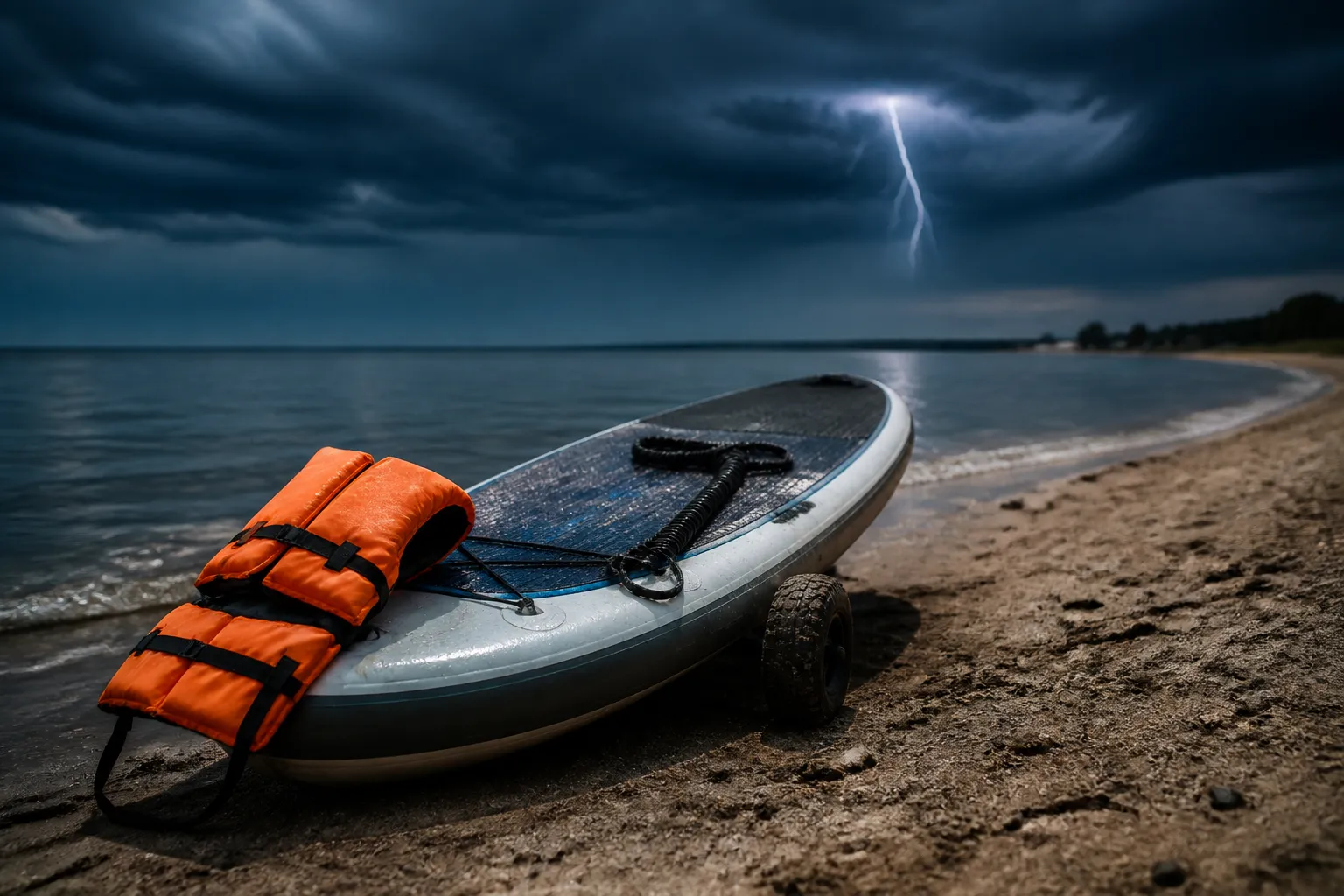
On Sunday, 5 July, a lightning strike off Pasir Ris Beach claimed the life of freelance sea‑sports instructor Mikhail Benyamin, prompting at least three outdoor‑sports operators to re‑examine their safety protocols. The incident occurred even though existing rules require activities to stop at the first sign of dangerous weather.
Benyamin had borrowed paddleboards and kayaks from Kokomo Beach Club, a brand under Outdoor Adventures, for a family outing. The strike happened in clear weather, a circumstance that has raised questions about how rapidly conditions can change over the water.
Operators say that a Category 1 lightning warning from the National Environment Agency (NEA) is a clear “no‑go” signal, but they also rely heavily on visual and auditory cues on the ground. Fish On, a kayak‑rental and guided‑tour company, is in talks with another kayak‑fishing operator to improve its protocols. Founder Mohammad Nordin explained that the company uses both NEA alerts and its own observations to gauge how close lightning is. He noted that when lightning is 6 km away, participants should head to the nearest shelter; at 3 km they should be close to a shelter; and at 1 km they should be under a shelter. However, he said that at 6 km the flash can be faint, making it hard to see.
On‑site warning systems that use lights and sirens are also less effective for those farther offshore. Nordin said that the alarm can be heard if operators are near shore, but if they are more than 300 m away it is difficult to hear, and the lights are blocked by trees.
In response to the incident, Outdoor Adventures’ chief operating officer Berwin Tan announced that the company would strengthen instructor training, especially on weather awareness and navigating changing conditions at sea. The company also reviewed its safety measures almost immediately after learning of the incident.
Adventures by Asian Detours, another guided‑kayaking, cycling and nature‑experience operator, said its review covered instructor training, emergency protocols, evacuation procedures and participant briefings. The company’s head of operations, Samuel Tan, said that operations staff and instructors monitor conditions before participants head out and report back before activities begin. If conditions deteriorate, activities are postponed or cancelled.
The Singapore Canoe Federation, the national sports association for paddle sports, stated that its code of practice requires paddling activities to stop, or not start, when authorities issue Category 1 weather or lightning warnings. Activities must also stop when coaches or safety officers assess conditions to be unsafe because of strong winds, rough waters, rapidly changing weather or poor visibility.
The Outdoor Learning and Adventure Education Association added that activity providers should establish clear “weather trigger points” before programmes begin, continuously monitor forecasts and actual conditions, and be prepared to modify, suspend or evacuate activities if conditions become unsafe.
Leslie Tan, chief executive of the Singapore Sailing Federation, said that coaches are instructed to return immediately once lightning enters their training area. He described the use of radio and public‑address systems to alert participants to seek shelter.
Associate Professor Wang Xian Feng of NTU’s Centre for Climate Change and Environmental Health noted that Singapore experiences around 170 lightning days a year, making it one of the world’s more lightning‑prone regions. He said lightning can travel up to 10 km, so dangerous strikes are possible even when skies appear clear. He warned that people at sea are especially vulnerable because they are more exposed and have few places to seek shelter.
The incident has not led to a noticeable rise in cancellations, but it has heightened awareness within the industry. Operators are reviewing their protocols to ensure that “something like that doesn’t happen again,” said Tan.
The fatality comes less than two months after a worker at a Lim Chu Kang fish farm was struck by lightning, adding to questions about how outdoor activities should respond to fast‑changing weather.
The incident underscores the need for operators to combine official warnings with on‑site observations and to maintain clear evacuation plans. While the NEA’s lightning alerts remain a critical tool, the experience shows that conditions at sea can shift faster than forecasts allow, and that safety reviews are essential after any lightning strike.
The Singapore government has not announced any new regulations, but the industry’s response may influence future policy. For now, operators are focusing on training, communication and route planning to protect participants from lightning risk.
Benyamin had borrowed paddleboards and kayaks from Kokomo Beach Club, a brand under Outdoor Adventures, for a family outing. The strike happened in clear weather, a circumstance that has raised questions about how rapidly conditions can change over the water.
Operators say that a Category 1 lightning warning from the National Environment Agency (NEA) is a clear “no‑go” signal, but they also rely heavily on visual and auditory cues on the ground. Fish On, a kayak‑rental and guided‑tour company, is in talks with another kayak‑fishing operator to improve its protocols. Founder Mohammad Nordin explained that the company uses both NEA alerts and its own observations to gauge how close lightning is. He noted that when lightning is 6 km away, participants should head to the nearest shelter; at 3 km they should be close to a shelter; and at 1 km they should be under a shelter. However, he said that at 6 km the flash can be faint, making it hard to see.
On‑site warning systems that use lights and sirens are also less effective for those farther offshore. Nordin said that the alarm can be heard if operators are near shore, but if they are more than 300 m away it is difficult to hear, and the lights are blocked by trees.
In response to the incident, Outdoor Adventures’ chief operating officer Berwin Tan announced that the company would strengthen instructor training, especially on weather awareness and navigating changing conditions at sea. The company also reviewed its safety measures almost immediately after learning of the incident.
Adventures by Asian Detours, another guided‑kayaking, cycling and nature‑experience operator, said its review covered instructor training, emergency protocols, evacuation procedures and participant briefings. The company’s head of operations, Samuel Tan, said that operations staff and instructors monitor conditions before participants head out and report back before activities begin. If conditions deteriorate, activities are postponed or cancelled.
The Singapore Canoe Federation, the national sports association for paddle sports, stated that its code of practice requires paddling activities to stop, or not start, when authorities issue Category 1 weather or lightning warnings. Activities must also stop when coaches or safety officers assess conditions to be unsafe because of strong winds, rough waters, rapidly changing weather or poor visibility.
The Outdoor Learning and Adventure Education Association added that activity providers should establish clear “weather trigger points” before programmes begin, continuously monitor forecasts and actual conditions, and be prepared to modify, suspend or evacuate activities if conditions become unsafe.
Leslie Tan, chief executive of the Singapore Sailing Federation, said that coaches are instructed to return immediately once lightning enters their training area. He described the use of radio and public‑address systems to alert participants to seek shelter.
Associate Professor Wang Xian Feng of NTU’s Centre for Climate Change and Environmental Health noted that Singapore experiences around 170 lightning days a year, making it one of the world’s more lightning‑prone regions. He said lightning can travel up to 10 km, so dangerous strikes are possible even when skies appear clear. He warned that people at sea are especially vulnerable because they are more exposed and have few places to seek shelter.
The incident has not led to a noticeable rise in cancellations, but it has heightened awareness within the industry. Operators are reviewing their protocols to ensure that “something like that doesn’t happen again,” said Tan.
The fatality comes less than two months after a worker at a Lim Chu Kang fish farm was struck by lightning, adding to questions about how outdoor activities should respond to fast‑changing weather.
The incident underscores the need for operators to combine official warnings with on‑site observations and to maintain clear evacuation plans. While the NEA’s lightning alerts remain a critical tool, the experience shows that conditions at sea can shift faster than forecasts allow, and that safety reviews are essential after any lightning strike.
The Singapore government has not announced any new regulations, but the industry’s response may influence future policy. For now, operators are focusing on training, communication and route planning to protect participants from lightning risk.